
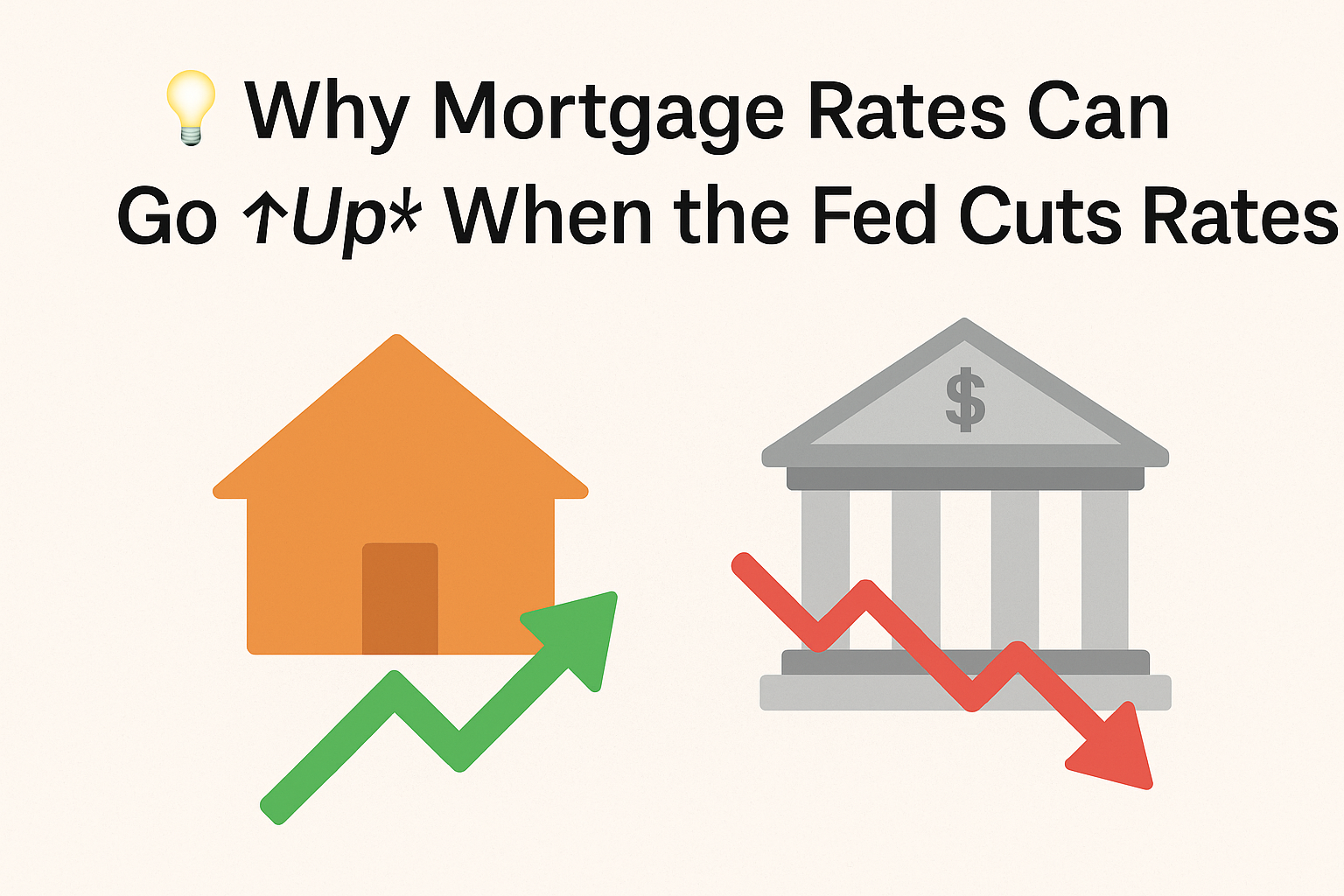
💰 Why Mortgage Rates Can Go Up When the Fed Cuts Rates
It sounds backwards, right?
The Fed says, “We’re cutting rates!” 🎉
And then mortgage rates… go UP 😕
Let’s make sense of this in plain English 👇
🏦 1. The Fed and Mortgage Rates Are Not the Same Thing
When you hear “The Fed cut rates,” it’s talking about the short-term rate banks charge each other for quick, overnight loans. 🏦💸
Mortgage rates, however, are based on long-term money — what investors think will happen with the economy years from now.
So while the Fed moves one small lever, mortgage rates are reacting to a whole mix of factors like inflation, jobs, and future economic confidence.
Think of it this way: the Fed sets the tempo… but mortgage rates are dancing to their own rhythm. 🎶
📈 2. The Market Reacts Before the Fed Even Acts
Here’s the part most people miss 👇
By the time the Fed actually cuts rates…
💡 the market already expected it — and adjusted prices in advance.
🧠 Think of it like this:
Imagine your favorite store announces a Black Friday sale. 🛍️
Everyone rushes to buy early, before the sale even starts.
So when the actual sale day comes… the shelves are half empty.
That’s what happens in the financial world too.
Investors and traders are constantly guessing what’s next — watching inflation, jobs data, and every word the Fed says.
If they believe a rate cut is coming, they start adjusting their investments before it happens.
By the time the Fed officially announces it, that “good news” is already baked in to the market.
And sometimes, investors even flip their thinking:
“Wait, if the Fed’s cutting rates… is the economy slowing down?”
That uncertainty can make them pull money out of bonds, which pushes bond yields (and mortgage rates) higher — even after a rate cut.
🔥 3. Inflation Still Runs the Show
Even if the Fed cuts rates, if prices are still rising everywhere (that’s inflation 🛒💵), investors get cautious.
When inflation is high, the money people lend today will be worth less in the future — so investors demand higher returns.
That pushes long-term rates, including mortgages, higher.
🎯 Bottom line: Until inflation cools down, rate cuts don’t always equal cheaper mortgages.
🏡 4. What This Means for You
Don’t worry about every Fed headline. The market moves fast — and most of the time, it’s reacting to what’s expected, not what’s announced.
If you’re thinking about buying or refinancing, here’s what matters most:
👉 Inflation trends — are prices rising or falling?
👉 The 10-year Treasury yield — that’s what mortgage rates usually follow.
👉 Your own readiness — being prepared to act when rates drop matters more than trying to time the market perfectly.
Having your documents and pre-approval ready means you can move quickly when the opportunity comes.
💡 In Simple Terms
-
The Fed controls short-term rates.
-
Mortgage rates follow long-term trends.
-
Inflation and investor expectations drive the biggest changes.
So the next time someone says,
“The Fed cut rates — mortgage rates must be going down!”
You’ll know the truth: not always 😉